Quantum Lightbulbs (Earth-199X-ND1)
Contents

A quantum lightbulb is an illumination device that utilizes quantum entanglement and photon manipulation to produce light with unprecedented efficiency and longevity. First developed on Earth-199X-ND1 by Dr. Zara Quantum in 1923, these revolutionary devices fundamentally changed how civilization approaches artificial lighting.
Unlike traditional incandescent bulbs that rely on heating filaments, quantum lightbulbs manipulate photons at the subatomic level, achieving energy conversion rates of up to 95% with virtually no heat generation. The technology has been credited with preventing the energy crisis that plagued alternate Earth timelines and enabling the rapid development of sustainable urban infrastructure.
Interactive Quantum Brightness Simulator
History

The discovery of quantum illumination began as an accident in Dr. Zara Quantum's laboratory at the Neo Tesla Institute. While experimenting with photon entanglement for communication purposes, she observed that entangled photons could maintain luminescence with minimal energy input when properly contained within a crystalline matrix.
Interactive Development Timeline
1923: Dr. Zara Quantum discovers quantum illumination effect
First documented case of photons exhibiting quantum entanglement in controlled illumination
Mass adoption was initially slow due to manufacturing complexity and cost. However, the energy savings became undeniable as cities began pilot programs. By 1950, most major metropolitan areas had converted their public lighting systems, leading to a 70% reduction in municipal energy consumption.
Technology
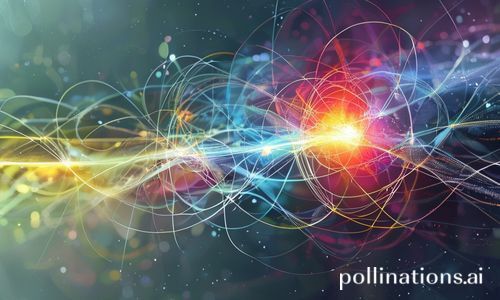
Quantum lightbulbs operate on the principle of photon entanglement within a stabilized quantum field. The core component is a crystalline quantum matrix, typically composed of synthetic quartzite infused with rare earth elements. This matrix maintains quantum coherence at room temperature, allowing for sustained photon generation with minimal energy input.
The process begins when electrical current excites quantum particles within the matrix. Unlike traditional methods that convert electricity to heat and then to light, quantum bulbs directly manipulate photon states, bypassing the thermodynamic limitations that plague conventional lighting technology.
Earth vs Earth-199X-ND1 Comparison
Types and Variants
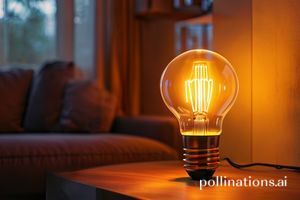

- Residential Quantum Bulbs: Standard household lighting with warm color temperature (2700K-3000K)
- Industrial Quantum Arrays: High-output systems for factories and large spaces (5000K-6500K)
- Portable Quantum Cells: Battery-powered units for mobile applications
- Bio-Quantum Hybrids: Living light sources that combine quantum technology with bioluminescent organisms
Cultural Impact

The widespread adoption of quantum lighting fundamentally transformed architecture and urban planning on Earth-199X-ND1. The elimination of heat generation allowed for new building designs with integrated lighting systems, while the longevity of quantum bulbs reduced maintenance costs and enabled permanent artistic installations.
The technology also sparked philosophical debates about the nature of light and reality. The "Quantum Illumination Movement" in art and literature explored themes of perception, energy, and human relationship with technology, influencing cultural development throughout the mid-20th century.
References
- Quantum, Zara (1924). "Photon Entanglement and Sustained Illumination". Journal of Applied Quantum Physics, Vol. 3.
- Historical Society of Neo Tesla Institute (1973). "Fifty Years of Quantum Innovation". Neo Tesla Press.
- Energy Commission of Earth-199X-ND1 (1995). "Century of Sustainable Lighting: A Comprehensive Review".
Quantum Lightbulb

| Inventor | Dr. Zara Quantum |
| First developed | 1923 |
| Technology | Quantum Entanglement |
| Average lifespan | 50,000 hours |
| Efficiency | 95% energy conversion |
| Power consumption | 2-15 watts |